
A short, practical routine for the home pooja shelf: what to keep ready, a simple order of steps, and how families make it their own.
தமிழில் படிக்க →A daily pooja does not have to be long or need many things. In most Tamil homes it is a few quiet minutes: a lamp, some flowers, incense, a simple offering and camphor aarti. What matters most is doing it regularly and with a clean, calm mind.
Below is a simple routine that many families follow. Your own family may do things in a different order or add slokas and practices of its own. Follow those first. This guide just helps you set up and keep the basics stocked.
1. When do families do the daily pooja?
Many households light the lamp in the morning after bathing and again at dusk. Tamil families often call the evening lamp-lighting time vilakku vaikkum neram. If you can only manage once a day, a regular time that suits your household is better than an irregular, rushed one.
2. Your daily pooja kit
Bought once
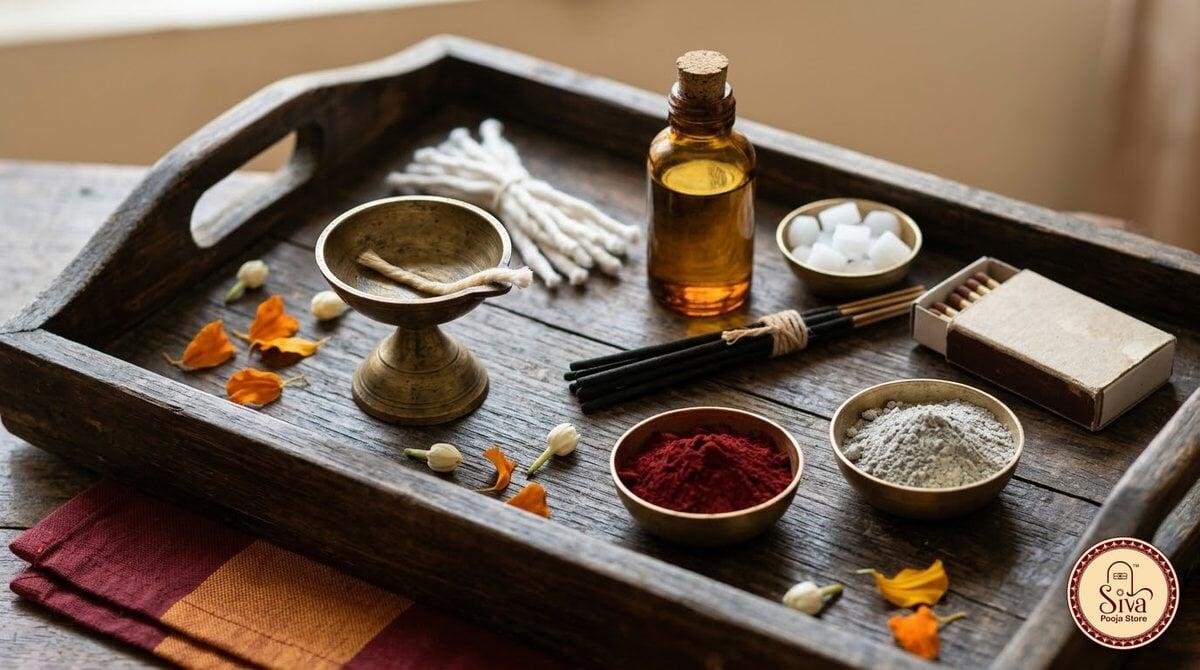
- A lamp: a small kuthu vilakku or an agal lamp.
- A camphor aarti plate or holder, a small water vessel (sombu or panchapatram) and a plate for flowers and naivedyam.
- Pictures or idols of the deities your family worships.
We don't list lamps or brass ware online at the moment. Please ask at the store.
Used up and restocked
- Sesame oil or ghee, and cotton wicks, for the lamp.
- Camphor for aarti, and a matchbox.
- Incense sticks and/or sambrani.
- Kumkum, turmeric, vibhuti and sandalwood powder, as your family uses them.
- Simple naivedyam that keeps well, such as sugar candy (kalkandu) and raisins, along with fresh fruit or whatever is cooked at home.
3. A simple step-by-step routine
- Clean the space. Remove yesterday's flowers, wipe the shelf and the lamp, and change the water in the vessel.
- Get ready yourself. Most families bathe and wear clean clothes before the pooja.
- Kolam (optional). Some homes draw a small kolam in front of the pooja shelf.
- Tilak for the deities. Apply kumkum, turmeric or sandal paste to the images, as your family does.
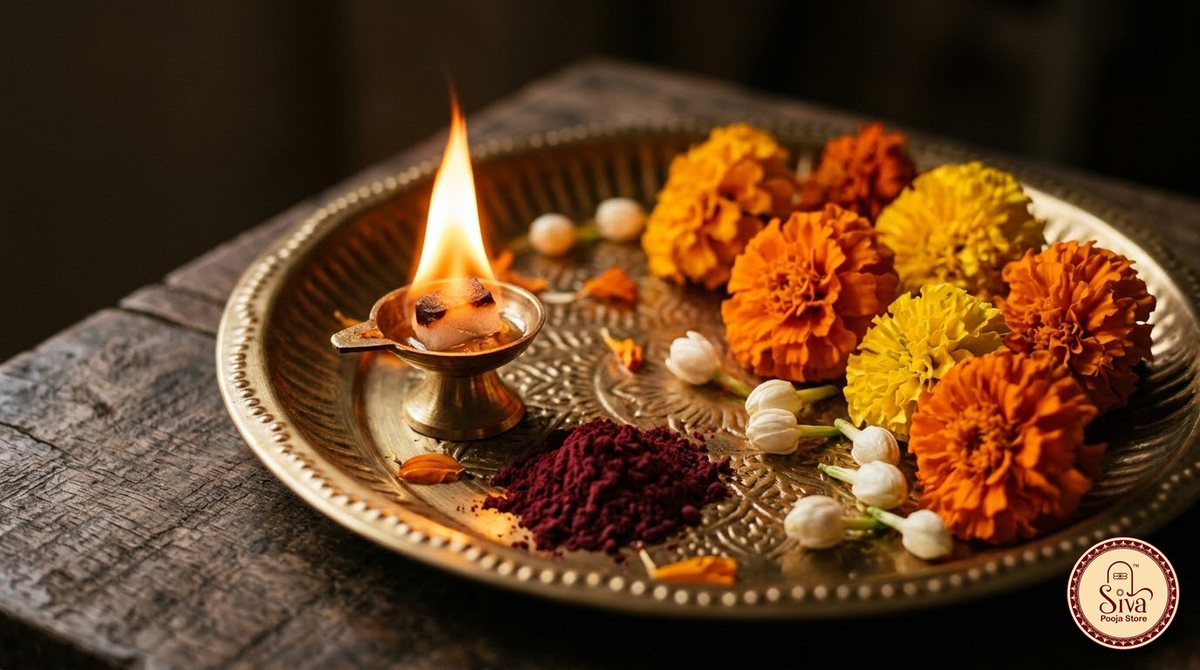
- Light the lamp. Add oil or ghee, place the wick and light it.
- Flowers and fragrance. Offer fresh flowers and light incense or sambrani.
- Offer naivedyam. Place fruit, sugar candy, raisins or the food cooked for the day before the deities.
- Pray. Say the slokas or prayers your family follows, or simply chant the names of God you know. We have not included mantras here. Please learn them from your elders, your priest or a trusted book.
- Camphor aarti. Light camphor and wave the aarti in front of the deities, then take the aarti yourself.
- Share the prasadam with the family.
4. Special days of the week
Many Tamil families do a slightly longer pooja on certain days, according to the deity they worship. Fridays and Tuesdays are popular for an evening sambrani dhoopam. On Saturdays some families light a sesame-oil lamp. Follow your family's custom for which days and which deities.
5. Daily pooja checklist
| Item | Tamil name | Used for | Shop |
|---|---|---|---|
| Sesame oil / cow ghee | நல்லெண்ணெய் / நெய் | Lamp | Oil · Ghee |
| Cotton wicks | விளக்கு திரி | Lamp | View |
| Camphor tablets | வில்லை சூடம் | Aarti | View |
| Matchbox | தீப்பெட்டி | Lighting | View |
| Incense sticks | பத்தி | Fragrance | View |
| Sambrani cups | கம்ப்யூட்டர் சாம்பிராணி | Dhoopam | View |
| Kumkum, turmeric | குங்குமம், மஞ்சள் | Tilak | Kumkum · Turmeric |
| Vibhuti, sandal | விபூதி, சந்தனம் | Tilak | Vibhuti · Sandal |
| Sugar candy, raisins | கல்கண்டு, கிஸ்மிஸ் | Naivedyam | Kalkandu · Raisins |
| Flowers, fruits | பூ, பழம் | Offering | Buy fresh locally |
Keep your pooja shelf stocked
Everything in the checklist above, except flowers and fruit, is available in our online store. For lamps and brass ware, ask at our Dindigul shop: 44, VM Complex, Big Bazaar Street, Begambur. We are open Monday to Saturday, 9 AM to 9 PM, and closed on Sundays.
Shop basic pooja suppliesSee best sellersCommon questions
What are the minimum items needed for a daily pooja?
A lamp with oil or ghee and a wick, a matchbox, and something to offer, even just water or a flower. Camphor and incense are common additions. Many families keep it this simple on busy days.
Should I use sesame oil or ghee for the daily lamp?
Both are widely used. Many homes use sesame oil every day and ghee on special days, but practice varies. Follow what your family does.
Is it okay to do the pooja only once a day?
Yes. Many families light the lamp once a day, morning or evening. A regular routine matters more than its length.
Which slokas should I say?
That depends on your family's tradition and the deities you worship. We don't publish mantras. Please learn them from your elders, your family priest or a trusted book.
Festival guides
This guide describes a simple routine common in Tamil homes. Daily pooja practices vary widely by family, community and the deities worshipped.