
What most Tamil homes keep ready for the early-morning oil bath, the Deepavali pooja, sweets and evening lamps — with notes on where family customs differ.
தமிழில் படிக்க →- Date in Tamil Nadu: Sunday, 8 November 2026 (Naraka Chaturdashi).
- Tithi (Chennai): Chaturdashi until about 11:27 AM, then Amavasya begins.
- Oil bath: traditionally taken early, before sunrise. For the exact time in your town, check your local panchangam or ask your family priest.
In Tamil Nadu, Deepavali is celebrated on Naraka Chaturdashi. The day begins before dawn with an oil bath, often called Ganga snanam or ennai kuliyal. Then come a simple pooja at home, new clothes, sweets shared with family and neighbours, and lamps in the evening.
This guide lists the items most families use. It is a checklist, not a rulebook. Customs differ between communities, villages and households, so follow what your elders or your family priest tell you.
1. Before sunrise: the oil bath
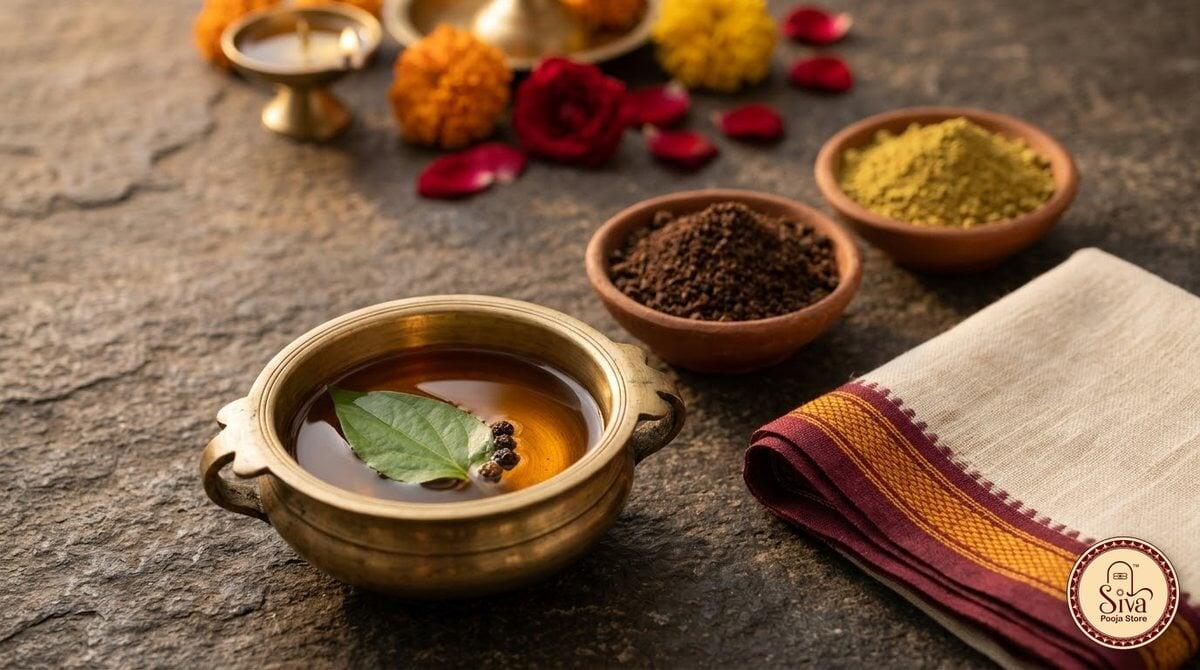
The Deepavali oil bath is the most widely shared custom in Tamil homes. In many families an elder applies a little oil on everyone's head, then each person bathes before sunrise.
- Gingelly (sesame) oil – nallennai. This is the oil most families use for the bath. Some warm it lightly first, and some add ingredients their family has always used. Follow your own family's way.
- Herbal hair-wash powder (shikakai or arappu). Many families use one to wash off the oil. (These are not sold online. Please ask at the store.)
- New clothes. Many families place them in the pooja room before wearing them. Some put a small dot of turmeric or kumkum on a corner of each garment.
Many families also eat a little Deepavali marundhu (legiyam) after the bath. Each family has its own recipe, so we have not listed its ingredients here.
2. Deepavali morning pooja items
After the bath, most homes do a short pooja before the new clothes are worn and the sweets are shared. The items below are the ones most families use. You do not need all of them.
Lamp and aarti
- A kuthu vilakku or agal lamp with sesame oil or ghee, and cotton wicks.
- Camphor for the aarti (karpoora aarti). Use villai soodam (tablets) or katti soodam (block).
- Matchbox. It is worth keeping one in the pooja room.
Fragrance
- Incense sticks (pathi / agarbathi).
- Sambrani. Ready-to-light "computer sambrani" cups need no charcoal.
For the deity and the family
- Kumkum, turmeric and vibhuti, as your family uses them.
- Sandalwood powder mixed with a little rose water (panneer) to make sandal paste.
- Fresh flowers, betel leaves, areca nut, bananas and fruits. Buy these fresh near the day.
3. Sweets and naivedyam pantry
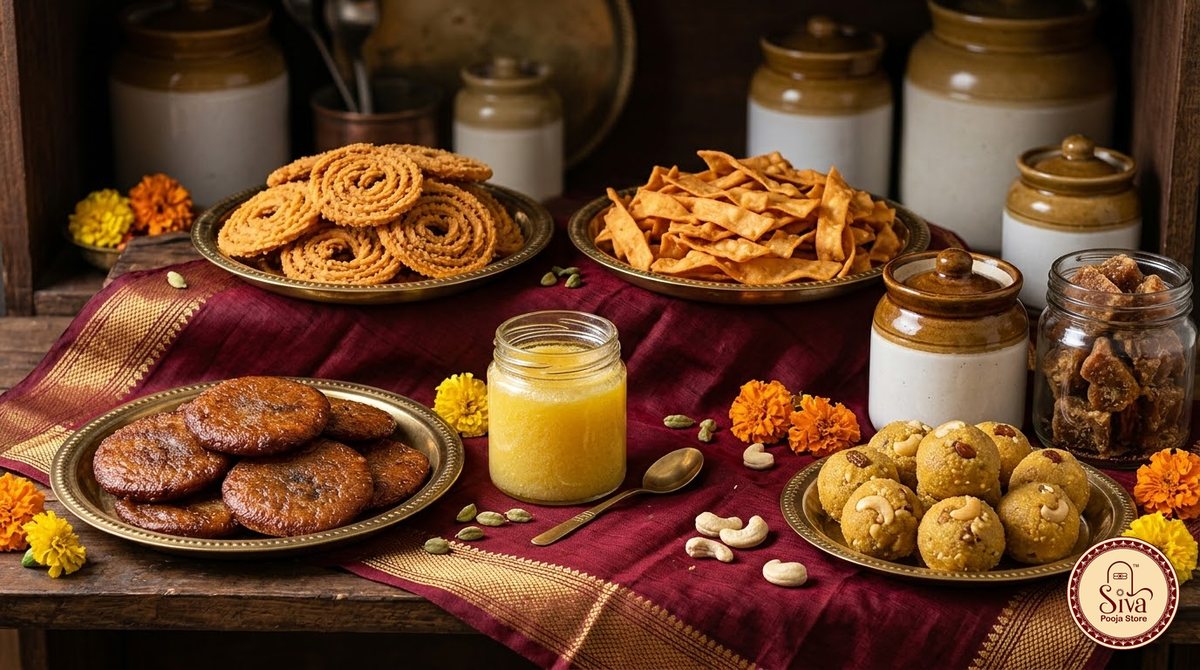
Most Deepavali sweets are made at home in the days before the festival, and a portion is offered as naivedyam first. These pantry items appear in many traditional recipes:
Edible camphor is used in very small pinches for flavour. Never use regular aarti camphor in food.
4. Evening lamps
In the evening, many homes light lamps at the entrance, in the pooja room and along windows or balconies. For several lamps you will need:
- Enough sesame oil or ghee for all the lamps.
- A good stock of cotton wicks. A pack of 100 goes quickly when you light rows of lamps.
- A matchbox, and a safe place to keep it.
5. Kolam at the entrance
Many homes draw a fresh kolam at the entrance on festival mornings. Some use white kolam powder for clean lines. Others use rice flour, which also feeds ants and birds.
6. If your family does Lakshmi Kubera pooja
Some Tamil families also perform Lakshmi Kubera pooja around Deepavali. Others do not observe it at all. The day, the time and the method all vary from family to family. We do not give mantras or a timing here, so please follow your family's pooja book or your priest. The items used are usually the everyday pooja items listed above:
- Lamp, oil or ghee, wicks, camphor and incense.
- Turmeric, kumkum and sandal paste.
- Flowers, betel leaves, areca nut, fruits and the sweets prepared at home.
- Coins. Many families place coins before the deity.
7. Complete Deepavali checklist
| Item | Tamil name | Used for | Shop |
|---|---|---|---|
| Sesame (gingelly) oil | நல்லெண்ணெய் | Oil bath, lamps | View |
| Cotton lamp wicks | விளக்கு திரி | Morning and evening lamps | View |
| Cow ghee | பசு நெய் | Ghee lamp, sweets | View |
| Camphor tablets / block | வில்லை சூடம் / கட்டி சூடம் | Aarti | Tablets · Block |
| Incense sticks | பத்தி | Pooja | View |
| Sambrani cups | கம்ப்யூட்டர் சாம்பிராணி | Dhoopam | View |
| Kumkum | குங்குமம் | Pooja, tilak, new clothes | View |
| Turmeric powder | மஞ்சள் தூள் | Pooja, new clothes | View |
| Sandalwood powder | சந்தனப் பொடி | Sandal paste | View |
| Rose water | பன்னீர் | Sandal paste, sprinkling | View |
| Vibhuti | விபூதி | Pooja | View |
| Cashews, raisins, cardamom | முந்திரி, கிஸ்மிஸ், ஏலக்காய் | Sweets | Pooja grocery |
| Jaggery cubes | அச்சு வெல்லம் | Sweets, naivedyam | View |
| Kolam powder | கோல பொடி | Entrance kolam | View |
| Matchbox | தீப்பெட்டி | Lighting lamps | View |
| Flowers, betel leaves, fruits | பூ, வெற்றிலை, பழம் | Pooja | Buy fresh locally |
Want everything in one place? See our Festival Specials and Basic Pooja Supplies.
Order early for Deepavali
Delivery typically takes 3–7 business days depending on your location (see our Shipping Policy). Please order early so everything reaches you before 8 November.
Prefer to shop in person? Visit us at 44, VM Complex, Big Bazaar Street, Begambur, Dindigul. We are open Monday to Saturday, 9 AM to 9 PM, and closed on Sundays.
Shop Festival SpecialsCall 99420 38038Questions families ask us
When is Deepavali 2026 in Tamil Nadu?
Sunday, 8 November 2026, on Naraka Chaturdashi. We checked this date against Drik Panchang for Chennai. Local panchangams may give slightly different timings for the oil bath.
Which oil is used for the Deepavali oil bath?
Most Tamil families use gingelly (sesame) oil, or nallennai. Some warm it lightly or add ingredients their family has always used.
Can I light the Deepavali lamp with ghee instead of oil?
Yes. Families use sesame oil, ghee, or both. Some use ghee for the pooja-room lamp and sesame oil for the lamps outside.
Is edible camphor the same as aarti camphor?
No. Edible camphor (pachai karpooram) is used in tiny amounts in sweets and prasadam. Aarti camphor (soodam) is only for burning and must never be eaten.
Do you sell clay agal lamps online?
Not at the moment. We stock wicks, oil, ghee and camphor online. For lamps, please call the store or visit us in Dindigul.
More festival guides
Date source: Drik Panchang day panchangam for Chennai (8 November 2026), checked on 13 October 2026. This guide describes common practice in Tamil Nadu. Customs vary by family and community.