
Four powders sit on almost every Tamil pooja shelf: vibhuti (thiruneeru), kumkum (kungumam), sandalwood (sandhanam) and turmeric (manjal). They are applied to the deity and then to the forehead in a set order, and each has a plain meaning. This guide covers what they are, how they are used, and how to keep them fresh. All four are sold loose and in packs at Siva Pooja Store under kumkum, turmeric and holy powders.
1. Vibhuti (thiruneeru)
What it is. Sacred ash. Traditional vibhuti is made by burning dried cow dung cakes with ghee and husk and sieving the ash fine. Temple vibhuti often comes from the homam fire. It is Sivan's mark, and the word thiruneeru means "holy ash".
How it is applied. With the ring finger, or three fingers for the three horizontal lines (thiripundram) across the forehead, sometimes also on the arms, chest and neck. The lines stand for the burning of the three impurities: ego, karma and illusion. Saivite devotees apply it after bathing and before every pooja; Ayyappa and Murugan devotees wear it through their vrathams.
Kinds.Regular vibhuti for daily use; special vibhuti, finer and whiter, for the deity and for festivals; scented varieties such as javvadhu vibhuti for the evening pooja.
Storage. Keep dry in a closed tin or a vibhuti pouch; it clumps in damp air. Lasts indefinitely if dry.
2. Kumkum (kungumam)
What it is. The red powder made traditionally from turmeric treated with slaked lime, which turns it red, and a little oil. Good kumkum is deep red, soft and stains the finger slightly; it should not be bright pink or gritty.
How it is applied. A single dot (pottu) at the centre of the forehead, placed over the vibhuti or sandal. Married women wear it also in the parting of the hair. Kumkum is offered to Amman, Lakshmi and all forms of Devi, and it is the first thing exchanged when women visit each other (thamboolam).
Kinds. Plain kumkum for daily use, and thazhampoo (screwpine scented) kumkum for the deity.
Storage. In a closed kumkum box away from water; a wet finger spoils the whole box. Keeps for a year or more.
3. Sandalwood powder (sandhanam)
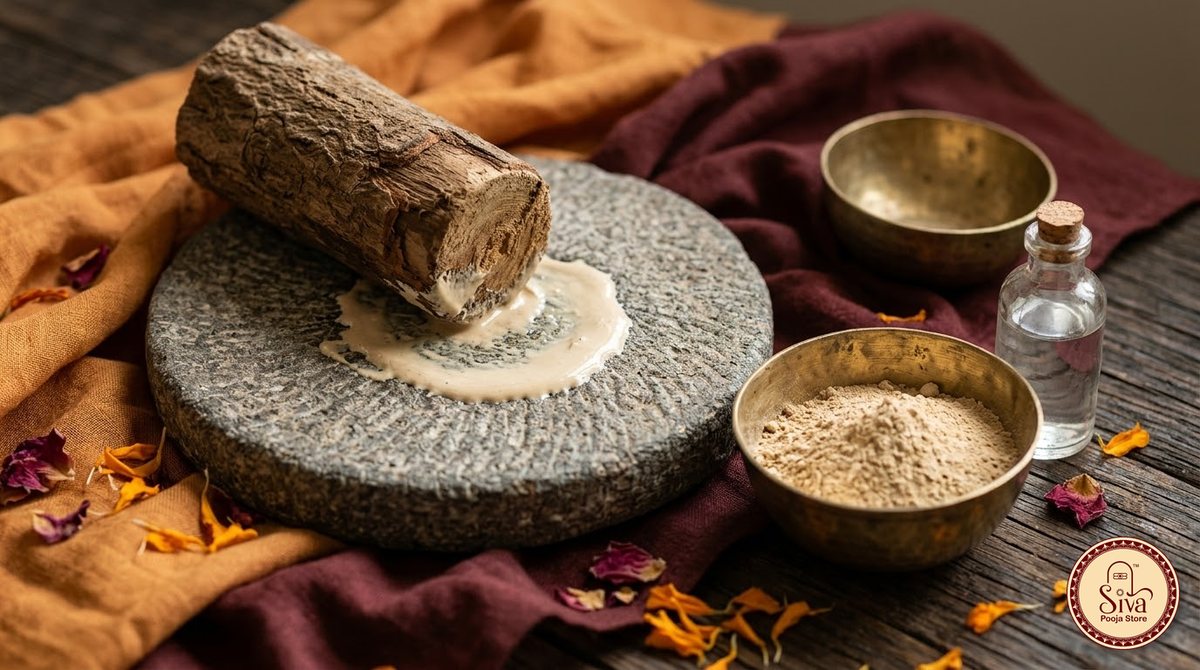
What it is. Ground sandalwood, used as a cooling paste. For pooja it is mixed with a few drops of water or rose water to a thick paste.
How it is applied. A vertical mark or a dot at the centre of the forehead for Perumal devotees, or a small dot under the kumkum. It is the main abhishekam paste for Perumal and for Murugan on Sashti days, and the base for the chandanam kaappu that covers the deity at festivals.
Kinds.Sandalwood powder for daily use; dasangam and thiraviyam, which are fragrant sandal-based blends used for abhishekam and for the deity's bath.
Storage. Mix only what you need; the paste dries in a day. Keep the powder closed and away from heat.
4. Turmeric (manjal)
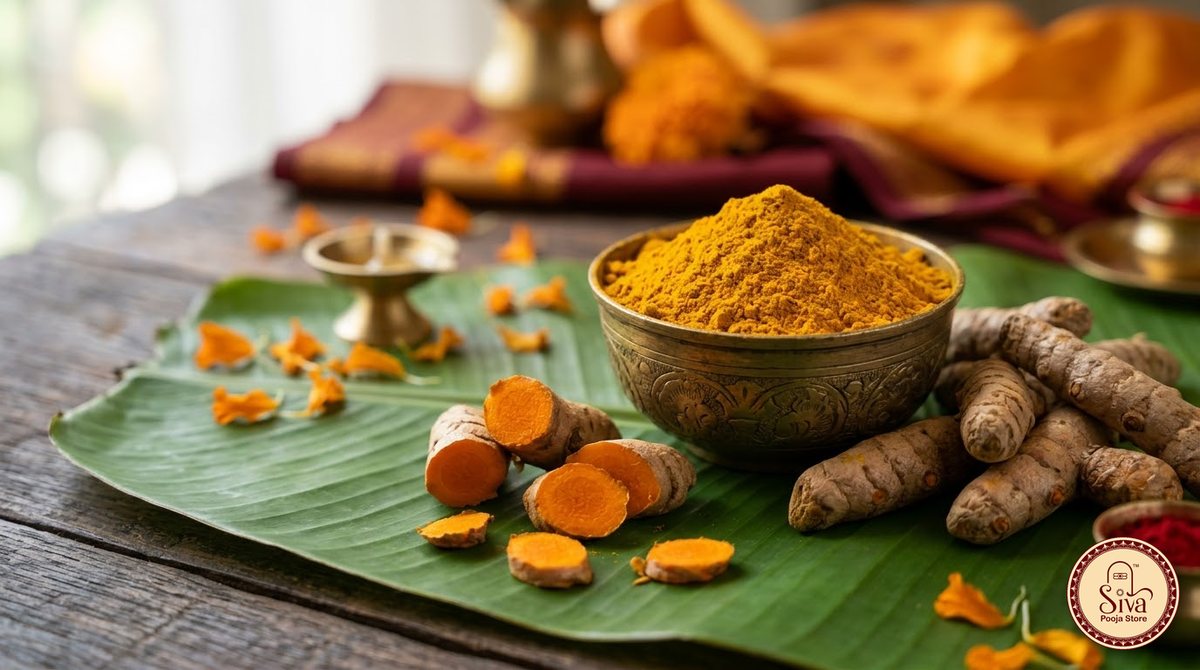
What it is. Pooja turmeric is the same root as kitchen turmeric, but kept separate and clean. Thiru manjal is the finer, paler turmeric used for the deity and for the mangalya pooja.
How it is applied. A small dot below the kumkum, or on the feet of the deity and at the doorstep. Turmeric water is used for the aarti at the end of every pooja, for welcoming guests and the cattle on Mattu Pongal, and for the kalasam. Turmeric root and finger turmeric are tied to the Pongal pot and the kalasam; turmeric powder is used daily.
Storage. Dry and closed; it absorbs smells. Keep pooja turmeric away from the kitchen jar.
5. The order of application
For Saivite families: vibhuti first (three lines), then sandal (dot or line), then kumkum (dot), then turmeric (small dot below). For Vaishnavite families: thiruman and srichoornam, or sandal, then kumkum. For Amman worship: turmeric first, then kumkum. Apply to the deity first, then take the prasadam from the same plate.
6. Buying and keeping the four powders
| Powder | Daily use pack | Festival pack | Keeps for |
|---|---|---|---|
| Vibhuti | 100 g | 500 g–1 kg | Years if dry |
| Kumkum | 50–100 g | 250 g | 1–2 years |
| Sandalwood powder | 50 g | 100–250 g | 1 year |
| Turmeric powder | 100 g | 250 g | 1 year |
All four are for pooja use only and are not edible. For cooking turmeric, buy from the grocery section.
Stocking your pooja shelf?
Siva Pooja Store repacks vibhuti, kumkum, sandal and turmeric from bulk in 100 g to 1 kg packs under its own label. Order at sivapoojastore.com or WhatsApp 91507 87862. Shops and temples can ask for wholesale rates.
Common questions
Why three lines of vibhuti? The thiripundram stands for the three worlds and the three impurities burnt away by Sivan; it is also the simplest sign of a Saivite devotee.
Is kumkum the same as sindoor? No. Kumkum is turmeric-based and red; sindoor in North India is a different preparation and is worn mainly in the hair parting.
Can sandal paste be kept overnight? It dries and cracks; mix fresh each morning or keep the paste under a wet cloth for a few hours.
Which powder for which deity? Vibhuti for Sivan, Murugan and Ayyappa; sandal for Perumal; kumkum for Amman and Lakshmi; turmeric for Amman and for the kalasam. Most home poojas use all four.